
Manufacturer Good Price CALCIUM CHLORIDE CAS: 10043-52-4
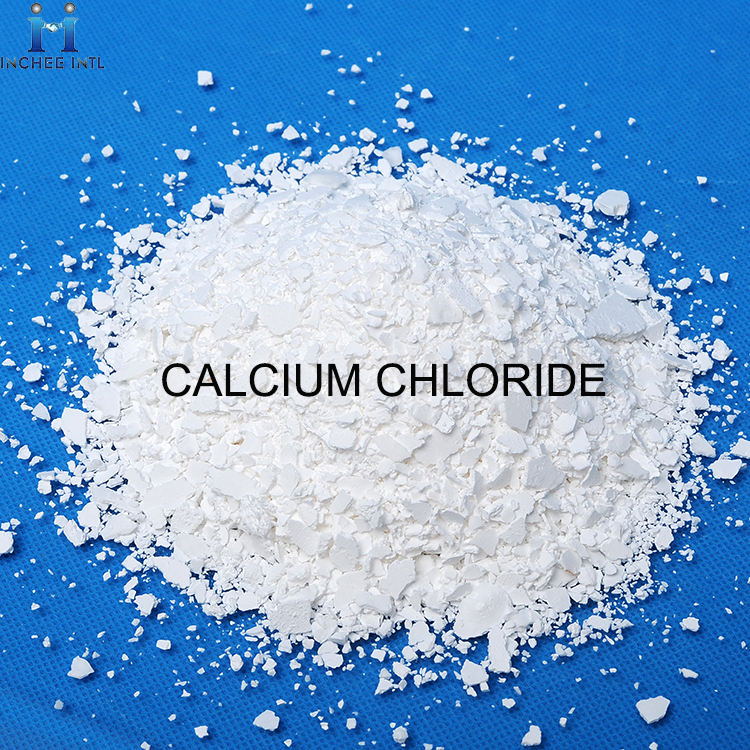
Applications of CALCIUM CHLORIDE
1. Calcium chloride (CaCl2) has many uses. It is used as a drying agent and to melt ice and snow on highways, to control dust, to thaw building materials (sand, gravel, concrete, and so on). It is also used in various food and pharmaceutical industries and as a fungicide.
2. Calcium chloride is one of the most versatile of the basic chemicals.It has several common applications such as brine for refrigeration plants, ice and dust control on roads, and in concrete. The anhydrous salt is also widely used as a desiccant, where it will absorb so much water that it will eventually dissolve in its own crystal lattice water (water of hydration). It can be produced directly from limestone, but large amounts are also produced as a by-product of the “Solvay Process” (which is a process to produce soda ash from brine).
Calcium chloride is also commonly used as an additive in swimming pool water as it increases the “calcium hardness” value for the water.Other industrial applications include use as an additive in plastics, as a drainage aid for wastewater treatment, as an additive in fire extinguishers, as an additive in control scaffolding in blast furnaces, and as a thinner in “fabric softeners”.
Calcium chloride is commonly used as an “electrolyte” and has an extremely salty taste, as found in sports drinks and other beverages such as Nestle bottled water. It can also be used as a preservative to maintain firmness in canned vegetables or in higher concentrations in pickles to give a salty taste while not increasing the food’s sodium content. It is even found in snack foods, including Cadbury chocolate bars.In brewing beer, calcium chloride is sometimes used to correct mineral deficiencies in the brewing water. It affects flavor and chemical reactions during the brewing process, and it can also affect yeast function during fermentation.
Calcium chloride can be injected as intravenous therapy for the treatment of “hypocalcemia” (low serum calcium). It can be used for insect bites or stings (such as Black Widow spider bites), sensitivity reactions, particularly when characterized by “urticaria” (hives).
3. Calcium Chloride is a general purpose food additive, the anhydrous form being readily soluble in water with a solubility of 59 g in 100 ml of water at 0°c. it dissolves with the liberation of heat. it also exists as calcium chloride dihydrate, being very soluble in water with a solubility of 97 g in 100 ml at 0°c. it is used as a firming agent for canned tomatoes, potatoes, and apple slices. in evaporated milk, it is used at levels not more than 0.1% to adjust the salt balance so as to prevent coagulation of milk during sterilization. it is used with disodium edta to protect the flavor in pickles and as a source of calcium ions for reaction with alginates to form gels.
4. Obtained as a by-product in the manufacture of potassium chlorate. The white crystals, soluble in water and alcohol, are deliquescent and must be kept in a well-stoppered bottle. Calcium chloride was used in iodized collodion formulas and in collodion emulsions. It was also an important desiccating substance used in tin calcium tubes designed to store presensitized platinum papers.
5. For the treatment of hypocalcemia in those conditions requiring a prompt increase in blood plasma calcium levels, for the treatment of magnesium intoxication due to overdosage of magnesium sulfate, and used to combat the deleterious effects of hyperkalemi
6. Calcium chloride is highly hygroscopic and is often used as a desiccant.
7. Calcium chloride is an astringent. It also helps improve the reaction among certain ingredients used in cosmetic formulations. This inorganic salt is no longer commonly used in skin care products and is being replaced with potassium chloride.
Specification of CALCIUM CHLORIDE
|
Compound |
Specification |
|
APPEARANCE |
WHITE,HARD ODORLESS FLAKE, POWDER,PELLET,GRANULE |
|
CALCIUM CHLORIDE(As CaCl2) |
94% min |
|
MAGNESIUM&ALKALI METAL SALT (As NaCl) |
3.5% max |
|
WATER INSOLUBLE MATTER |
0.2% max |
|
ALKALINITY(As Ca(OH)2) |
0.20% max |
|
SULFATE (As CaSO4) |
0.20% max |
|
PH VALUE |
7-11 |
|
As |
5 ppm max |
|
Pb |
10 ppm max |
|
Fe |
10 ppm max |
Packing of CALCIUM CHLORIDE
25KG/BAG
Storage: Calcium chloride is chemically stable; however, it should be protected from moisture. Store in airtight containers in a cool, dry place.


Our Advantages

FAQ
Q1: What is food-grade calcium chloride? What is the essential difference from industrial calcium chloride?
Food-grade calcium chloride is an inorganic calcium salt produced in strict accordance with national food additive standards. It appears as clean white crystals, granules or powder, featuring non-toxicity, extremely low impurities, and heavy metal contents that fully comply with food safety limits. The core differences from industrial calcium chloride lie in purification technology and application scope. Food-grade calcium chloride undergoes deep purification, impurity and bacteria removal with no harmful heavy metals or industrial residues, allowing direct contact with food. Industrial-grade calcium chloride contains excessive industrial impurities and heavy metals, which is strictly prohibited for food scenarios, and the two cannot be mixed or substituted.
Q2: What forms does food-grade calcium chloride have? What are the core differences?
There are two mainstream types on the market: food-grade anhydrous calcium chloride and food-grade dihydrate calcium chloride, both of which are compliant food additives. Their differences are mainly reflected in water content, hygroscopicity and application scenarios:
1. Food-grade dihydrate calcium chloride: It has stable water content, good solubility and high cost performance. As a universal material for food processing, it is suitable for most scenarios such as bean product production, fruit and vegetable preservation, beverage blending, and food shaping and solidification.
2. Food-grade anhydrous calcium chloride: It features higher purity and extremely strong hygroscopicity, focusing on drying, dehydration and moisture-proof functions. It is mostly used for drying food raw materials, moisture-proof preservation, high-end beverage purification and food dehydration processing.
Q3: What are the core physical and chemical properties of food-grade calcium chloride?
It is easily soluble in water with no peculiar smell and clear and transparent aqueous solution. It has excellent effects on coagulation, solidification, preservation and moisture resistance. With stable properties and no deterioration at room temperature, it is harmless to human body when used in compliance with regulations and is a legally permitted food additive in China.
Q4: What are the main food processing applications of food-grade calcium chloride?
1. Bean product processing: Used as a coagulant and stabilizer in the production of tofu, bean curd skin and thousand-layer sheets. It replaces traditional bittern with better forming effect, compact and delicate taste and higher yield.
2. Fruit and vegetable preservation and color protection: Soak fruits and vegetables in low-concentration solution to lock moisture, maintain crispness, prevent discoloration and wilting, and extend the shelf life of fresh products.
3. Beverage industry: Applied in the blending of mineral water, functional drinks and fruit juice to supplement calcium elements, adjust water hardness, and stabilize the taste and quality of beverages.
4. Food puffing and solidification: Used in canned food, pickled products and pasta processing to improve the hardness and crispness of ingredients and prevent softening and deformation.
5. Food drying and moisture prevention: Anhydrous type is used for moisture-proof drying of food raw materials, dried goods and nuts to avoid mildew and deterioration caused by moisture.
6. Cold chain refrigeration: Prepare food-grade low-temperature brine for circulating refrigeration in food cold storage and food processing equipment, which is compliant for contact with food production environments.
Q5: Can food-grade calcium chloride be used as a calcium supplement raw material for food?
Yes. As a high-quality water-soluble calcium source with high human absorption rate, calcium chloride is often added to beverages, dairy products and snack foods as a food fortifier to supplement dietary calcium. Its compliant addition meets food safety standards and is safe and reliable.
Q6: Are there concentration requirements for using food-grade calcium chloride? Can it be added arbitrarily?
Arbitrary addition is prohibited. It must strictly comply with the GB 2760 National Food Additive Usage Standard, with different limit values for different food categories. Excessive addition will cause bitter taste and poor flavor of food products and violate food production compliance requirements. Formal food processing requires quantitative proportioning and standardized usage according to category standards.
Q7: What is the correct usage method of food-grade calcium chloride?
1. Dissolution prior to use: For most food processing scenarios, fully dissolve the product in warm water and filter to obtain clear solution before production. Direct use of solid particles is forbidden to ensure uniform food taste.
2. Quantitative addition: Strictly control the dosage according to food categories and production processes, proportion on demand and avoid excessive addition.
3. Environmental requirements: Operate in a clean and sterile food production environment, store and use separately to prevent cross-contamination with industrial raw materials and pollutants.